
EDUCATION
CS Fund educates and organizes other funders to invest in critical, under-resourced issues

Fighting False Solutions
-
Environmental Grantmakers Association, Fall Retreat, October 2025
While many think of geoengineering - large-scale technological interventions to manipulate the earth’s oceans, land and atmosphere to ‘repair’ the climate - as speculative and far into the future, the reality is that geoengineering has already arrived, in the form in of industry-driven carbon capture or carbon removal techniques and largely unsanctioned experiments being conducted domestically and globally, especially in marine ecosystems and in Indigenous Communities that have not provided Free, Prior and Informed Consent. Also at play is an increasingly intensive drive for large corporations to gain access to lands in Africa and elsewhere to secure opportunities to ‘offset’ their emissions.
Why is the tech sector, deemed the “Broligarchy,” financing geoengineering, and how are carbon markets connected to these technologies? Why do some sectors see geoengineering as a panacea to the climate crisis, while others see it as a false solution or dangerous distraction? And what are the risks of technologies that have global geopolitical implications, including the potential for international conflict? Join our presenters to learn more about why geoengineering warrants serious attention by philanthropy now, how carbon markets are driving the development of some of these approaches, how experimentation is impacting communities domestically and abroad, and what communities propose are the real solutions to the climate crisis.
Speakers:
Gopal Dayaneni, ETC Group
Lili Fuhr, Center for International Environmental Law
Panganga Pungowiyi, Indigenous Environmental Network
Eleni Sotos, CS Fund (moderator)
-
Biodiversity Funders Group, Webinar, September 2025
Defined as the “deliberate intervention in the planetary environment of a nature and scale intended to counteract anthropogenic climate change and its impacts,” geoengineering encompasses an array of highly speculative technical “fixes” to the climate crisis. A technology that can be marine, land or atmosphere-based, it was once considered a technology far into the future. But geoengineering is here, with hundreds of experiments taking place globally, many without the consent or awareness of communities.
It is highly likely that geoengineering technologies, if deployed, would have devastating and potentially irreversible effects on biodiversity, both through their direct impacts and by compounding and exacerbating existing planetary crises caused by pollution, climate change, and unsustainable land use.
This webinar addressed twhere, why and how these technologies are showing up, how they are being financed, how they are impacting Local Communities and Indigenous People, and why philanthropy should be paying more attention.
Speakers:
Mary Church, Geoengineering Campaign Manager, Center for International Environmental Law
James Kerry, Senior Marine and Climate Scientist, OceanCare
Panganga Pungowiyi, Climate Geoengineering Organizer, Indigenous Environmental Network
Sue Sayer, Founder, Director and Chair, Seal Research Trust
Moderator: Eleni Sotos, Program Director, Fighting False Solutions, CS Fund
-
Environmental Grantmakers Association, Fall Retreat, October 2021
As our collective work to address the climate crisis ramps up, the deluge of ‘solutions’ threatens to overrun even the most climate-savvy funder. Proposals that appear at first glance to be feasible turn out to be unjust, unsustainable, and uneconomic and are a central plank of the myth of net zero emissions. During this session, we’ll highlight a few of the ‘trojan horse’ proposals that are threatening communities and reinforcing status quo incremental change, including carbon capture and storage; biomass energy; and “clean-burning” hydrogen. We’ll highlight true solutions that center justice and sustainability, led by communities on the frontlines
Speakers:
Colette Pichon Battle, Gulf Coast Center for Law and Policy
Flozell Daniels, Community Engagement Strategist Foundation for Louisana
Carroll Muffett, Center for International Environmental Law
Hosted by Park Foundation and CS Fund
-
Health and Environmental Funders Network, Annual Meeting, November 2019
Millions of people have been seduced by the Impossible Burger—the ideal combination of umami-laden juiciness and climate-friendly production. And yet the FDA has reported serious safety concerns about the product’s patented “heme” protein. Nevertheless, the
Impossible Foods CEO recently proclaimed that the burger would be produced using only GMO soy. We’ll discuss these and other questions about the Impossible Burger and many other foods that promise solutions to the climate and other crises.
Speakers:
Dana Perls, Friends of the Earth
Hosted by CS Fund
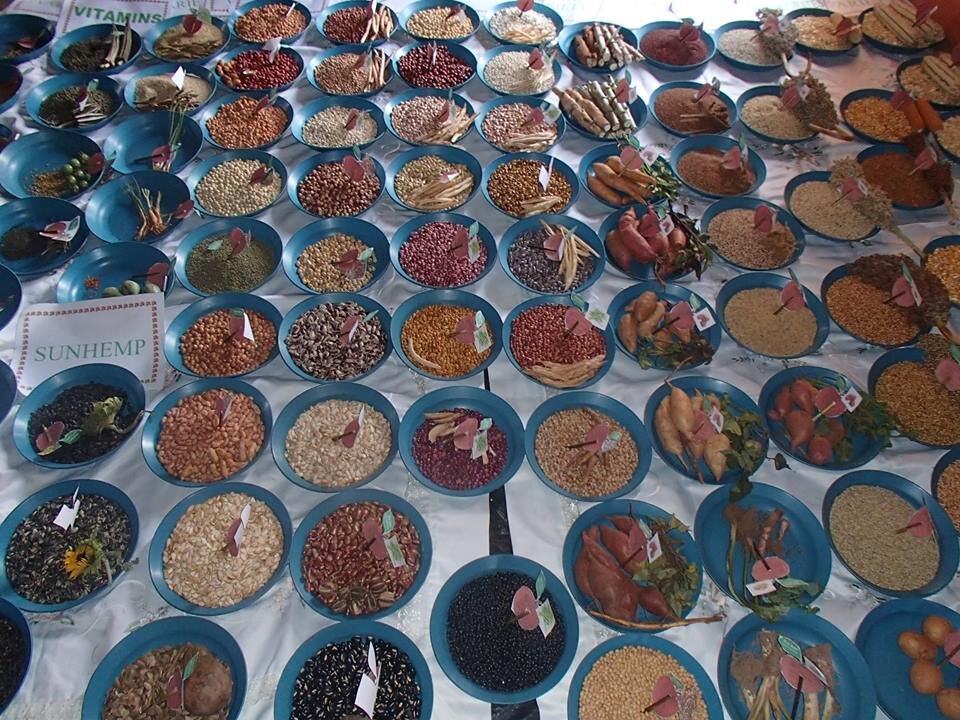
Food Sovereignty
Zimbabwe Small Holder Organic Farmers' Forum
-
Environmental Grantmakers Association (EGA), Annual Members Meeting, September 2026
with National Black Food and Justice Alliance; Marigold Fund
-
Global Alliance for the Future of Food, Webinar, August 2025
Join us ahead of Terra Madre Americas 2025—the official regional gathering of Slow Food International for North, Central, and South America, taking place 26–28 September 2025 in Sacramento, USA. The event will unite farmers, Indigenous producers, chefs, academics, activists, and policymakers to celebrate agroecology, biodiversity, and community knowledge.
This pre-conference webinar will:
Introduce Terra Madre Americas 2025 and the Slow Food Indigenous Peoples’ Network.
Highlight Indigenous-led solutions to food, climate, and environmental challenges.
Share opportunities for philanthropy to engage, invest, and collaborate.
Join us ahead of Terra Madre Americas 2025—the official regional gathering of Slow Food International for North, Central, and South America, taking place 26–28 September 2025 in Sacramento, USA. The event will unite farmers, Indigenous producers, chefs, academics, activists, and policymakers to celebrate agroecology, biodiversity, and community knowledge.
This pre-conference webinar will:
Introduce Terra Madre Americas 2025 and the Slow Food Indigenous Peoples’ Network.
Highlight Indigenous-led solutions to food, climate, and environmental challenges.
Share opportunities for philanthropy to engage, invest, and collaborate.
Event information:
Date: 04 September 2025
Time: 16:00–17:15 Coordinated Universal Time (UTC)
Languages: English & Spanish interpretation available
This event is co-organized by IFIP, CS Fund, Tamalpais Trust, Global Alliance for the Future of Food, and the Slow Food for Indigenous Peoples’ Network.
-
Biodiversity Funders Group, Annual Members Meeting, June 2025
-
Nyéléni Forum, September 2025
Global Alliance for the Future of Food, co-sponsored by the Agroecology Fund, Grassroots International, and Thousand Currents
-
International Funders for Indigenous Peoples, Global Conference, February 2025
Co-sponsored with Agroecology Fund
-
Global Alliance for the Future of Food, Webinar, December 2024
Global food system governance is anything but simple. How food systems are shaped is increasingly discussed not only at the national level but also within global Climate and Biodiversity deliberations (COPs).
That’s a good thing! But it can sometimes leave foundations wondering how policies are created and what is their relevance to work.
And yet, for a philanthropic foundation interested in supporting equitable and sustainable food systems at any level – whether local, national or international – gaining an understanding of global food systems governance is essential.
One multilateral space for international food system deliberations that rises above others due to its time-tested, participatory and influential nature is the UN FAO’s Committee on World Food Security (CFS). Its voluntary guidelines on critical issues such as nutrition, land tenure, agroecology and other innovations have been used widely.
Over the past year, a Philanthropic Foundations Mechanism (PFM) has been strengthened so that foundations can participate in the CFS alongside civil society organizations, governments and the private sector. It is an exciting mechanism through which we can learn together and seek collaboration to strengthen participatory spaces for food systems governance.
Please join the PFM for a discussion about global food systems governance. Hear a warm welcome from the CFS chair, an overview of food systems governance, and perspectives from foundation representatives who have chosen to invest time and resources into fortifying CFS processes. Who knows? You may be surprised to find that the CFS is quite relevant to your work!
Sponsored by the Global Alliance for the Future of Food, Agroecology Fund and Gates Foundation
-
Biodiversity Funders Group, Annual Members Meeting, June 2023
Co-sponsored with Agroecology Fund, Global Greengrants, Tamalpais Trust, New England Biolabs Foundation
-
Engaged Donors for Global Equity (EDGE), Annual Conference, October 2021
The concept of food sovereignty was developed by the global peasant movement La Via Campesina as a powerful response to destructive neoliberal policies. Since its launch on the global stage at the 1996 World Food Summit, food sovereignty has grown in visibility, influence and strength. As the world gathers to celebrate the 25th anniversary of food sovereignty, it is important to acknowledge the movement’s victories and ongoing struggles.
Join this interactive session to hear directly from Via Campesina member organizations on opportunities to support local and national initiatives to democratize control over land and other natural resources, deepen the agroecological transition of farms and food systems, defend local seeds, resist GMOs, and engage with governments to effect systems-wide change. The pandemic has highlighted the need to strengthen and support local food systems even more so, as disruptions in global supply chains have threatened food access for millions.
Organized by: La Via Campesina (LVC)
Hosted by: American Jewish World Service, Grassroots International, Thousand Currents, Why Hunger
Cosponsored by: CLIMA Fund, CS Fund
For: Funders who want to understand and support the Local-Global Food Sovereignty Movement
-
Webinar, July 2021
In this webinar, participants will listen to policymakers from Africa, Asia, Latin America, and Europe share their experiences in developing and implementing public policies and initiatives that support transitions from pesticide dependence to agroecology.
This proven approach to farming — grounded in principles of equity, collectivity, and food sovereignty — has enabled farmers around the world to replace dependence on highly hazardous pesticides with healthy, resilient food and farming systems.
The conversation with policymakers will highlight the wide diversity of policy approaches supporting agroecological transitions that are underway today, from local to national to region-wide programs in Argentina, Mexico, Spain, India, Benin, and West Africa.
Speakers:
Lidia García-García, Member of Coordination Team of the Right to Food Observatory, Valencia Food Policy Council & Center for Social Innovation (Spain)
Marta Isabel Ferreira, Minister of Family Agriculture, Province of Misiones (Argentina)
Vijay Kumar Thallam, Advisor to Government of Andhra Pradesh for Agriculture & Cooperation (India)
Cecilia Elizondo, Academic Staff of Agroecology Group, El Colegio de La Frontera Sur & former Chief of Cabinet of Ministry of Environment and Natural Resources (Mexico)
Simplice Davo Vodouhe, Coordinator of the Benin Organization for the Promotion of Organic Agriculture (OBEPAB) and Advisor to the Benin government's organic action plan (Benin)
Ernest Aubee, Head of Agriculture Division, Economic Community of West African States (ECOWAS) Commission (West Africa)
Ana María Suárez Franco, Permanent Representative of FIAN in Geneva/Accountability Coordinator.
Rights and Governance
National Security Archive
-
Webinar, December 2022
Activists, organizers, family members of victims, and survivors of police violence have faced significant surveillance, criminalization, and physical harm as a result of advocating against police brutality. State legislators across the country have made it easier to criminalize protesters' speech, physically harm them during actions, and stop their ability to record or even say anything against a police officer in response to brutality. This harmful targeting is particularly acute for Black and Brown protesters who are more likely to face racial violence by both state actors and other opponents when advocating against police brutality. This repressive response to individuals exercising their constitutional rights not only has harmful implications for their lives and families, but to Democracy overall.
Speakers
Mara Verheyden-Hilliard, Center for Protest Law & Litigation
Brianna Gibson, BlackOUT Collective
Lola N’sangou, Mass Liberation AZ
Rai Lainer, Michigan Liberation
Nakia Wallace, Session Facilitator, Communities Transforming Policing Fund
This session will highlight the long-term criminal, civil, and safety consequences confronted by protesters of police violence. Including an overview of the emerging ecosystem to support protesters of police violence, as well as, the significant gaps in infrastructure to provide the level of legal, physical, and emotional support necessary to sustain these movements that are critical to community safety and Democracy.
Join us for this critical and forward looking discussion on how funders who support criminal justice, Democracy, grassroots organizing, and movement building can come together to strengthen and defend movement leaders and activists.
Sponsors: Communities Transforming Policing Fund, CS Fund, Funders for Justice, Piper Fund, Center for Protest Law & Litigation
-
Webinar, July 2020
We are bearing witness to the largest protest movement in US history. Across the country we are seeing people rise up and take to the streets to demand justice for Black lives and an end to police brutality. Indigenous Water Protectors and climate protesters are also using civil disobedience to shut down dirty energy projects. No matter the issue, non-violent protest has always been fundamental to creating social change and is vital to the health of our democracy.
Attempts to stifle dissent are not new, but right now protesters nationwide are dealing with unprecedented, multi-pronged assaults on their right to speak out and make change. This includes militarized police forces violently dispersing and arresting protesters, a proliferation of anti-protest bills that impose severe criminal penalties and fines against protesters, and aggressive prosecutions and Strategic Lawsuits Against Public Participation (SLAPP suits) designed to intimidate and tie protesters up in court.
At the same time, national attention directed toward the protests and an increasingly supportive view of protesters have created a unique opportunity for positive reform that would have been unimaginable six months ago. Whether fighting for Black lives, Indigenous sovereignty, immigrants’ rights, climate change, clean water, food systems, or education - peaceful protest is vital to achieving our goals and attempts to stifle protest will impact us all movements for justice.
Please join us to hear from leaders on the front lines about the integral role protests play in movements for social change and the challenges they are confronting nationwide, the path forward for positive reform, and the ways that funders can support networks and campaigns to defend and champion our right to protest.
Speakers:
Maurice Mitchell, Working Families Organization/Working Families Party, Movement for Black Lives
Krystal Two Bulls, Oglala Lakota/Northern Cheyenne organizer, Voices of the Sacred, NDN Collective
Anne Rolfes, Louisiana Bucket Brigade
Mara Verheyden-Hilliard, Partnership for Civil Justice Fund
-
Funder Briefing, Oakland CA, September 2019
Black lives. Indigenous sovereignty. Immigrants’ rights. International human rights. Climate change. Clean water. Food systems. Education.
No matter the issue, peaceful protest is fundamental to creating social change. As money floods our political process, voting rights are rolled back, and courts are captured, the right of the public to assemble, oppose governmental and corporate actions, and demand change and accountability is ever more critical. However, a multi-pronged assault on the right to peaceful protest is proliferating nationwide and jeopardizing all that we are fighting for.
Protesters are being subjected to intrusive surveillance, violent and militarized policing, and overzealous prosecution designed to suppress their activism.
Anti-protest laws creating severe criminal penalties and fines have been enacted in 12 states (over 100 bills have been considered in 35 states) in response to actions led by Indigenous Water Protectors, Black Lives Matter, and students opposing white supremacy. Some bills explicitly target foundations that support these groups.
Anti-boycott laws targeting the movement for Palestinian rights have been adopted in 27 states, and are being considered by more than a dozen other states and the federal government – a model for repressing boycotts of all kinds.
Gag laws passed in 12 states seek to chill undercover activists and whistleblowers. Originally aimed at factory farms, some laws have expanded to any private business, including hospitals, elder care and veteran care facilities, and schools.
At the federal level, proposed National Park Service regulations would all but eliminate protest in our nation’s capital. A new presidential executive order aimed at college campuses would chill speech by students of color and anti-fascists.
Corporations are bringing SLAPP suits (Strategic Lawsuits Against Public Participation) against activists and NGOs, aimed at tying groups up in costly litigation.
Join us to hear from leaders on the front lines in conversation about the challenges they are confronting nationwide, how they are building alliances to fight back and win, and how funders are supporting new networks and campaigns to defend and champion our right to protest.
Speakers:
Kylah Johnston, The People’s Lobby
Liz Jackson, Palestine Legal
Mara Verheyden-Hilliard, Partnership for Civil Justice Fund
Nick Tilsen, NDN Collective
Steven Renderos, MediaJustice
-
Environmental Grantmakiers Association, Fall Retreat, September 2019
A multi-pronged assault on Indigenous Water Protectors, oil pipeline protesters, and climate justice activists is jeopardizing all that we are fighting for. The “Standing Rock” model of policing protests is proliferating nationwide. Draconian legislation designed to criminalize protest has passed in 14 states, with 100 more bills introduced. Regulations have been proposed to limit protest on the most iconic lands in our nation’s capital. Corporate-driven Strategic Lawsuits Against Public Participation are being brought against environmental organizations and activists. Hear from leaders on the front lines about these challenges, and how funders are supporting new networks to defend these fundamental rights.
Speakers:
Katie Redford, Director, EarthRights
Nick Tilsen, President & CEO, NDN Collective
Mara Verheyden-Hilliard, Executive Director, Partnership for Civil Justice Fund
Philanthropic Practice
-
Devex, April 2025
-
Devex Pro Funding Briefing, March 2026
Speakers:
Chung-Wha Hong, Co-Executive Director of global philanthropy, Grassroots International
Kyra Busch, Program Director, CS Fund.
-
Solidaire Network, Unity & Power Tenth Anniversary Retreat, September 2023
Our movements suffer when leaders burn out, so let's make sure we continue to find joy and sustenance from the work! Come learn from Solidaire members who have had diverse careers in social justice and philanthropy and hear what has sustained them and continues to motivate them in their work.
Speakers:
Bailey Malone, Executive Director, CS Fund
Alexie Torres, Co-Creator, Jubilee Gift
Connie Archbold Robinson, Executive Director, Panta Rhea Foundation
Facilitator:
Daniel Lee, Director of Philanthropic Transformation, Solidaire Network
-
Environmental Grantmakers Association, Fall Retreat, October 2021
We are all familiar with the ‘cascading crises’ of our era: the COVID-19 pandemic, systemic racism, threats to democracy and accelerating ecological degradation. What 2020 has revealed is the ability of this multitude of challenges to impede and disrupt our work in unpredictable and interacting ways. As philanthropists with programmatic objectives, how do we deal with this increasing uncertainty? During this grantmaker practice session, we’ll hear from leading practitioners facing this challenge head-on in diverse and innovative ways, and invite sharing, questions and participation from an interactive audience.
Speakers:
Alnoor Ladha, Co-Director, Transition Resource Circle
Bailey Malone, Executive Director, CS Fund
Paula Morris, Director, Resilience Initiative
Shorey Myers, Executive Director, Jenifer Altman Foundation