
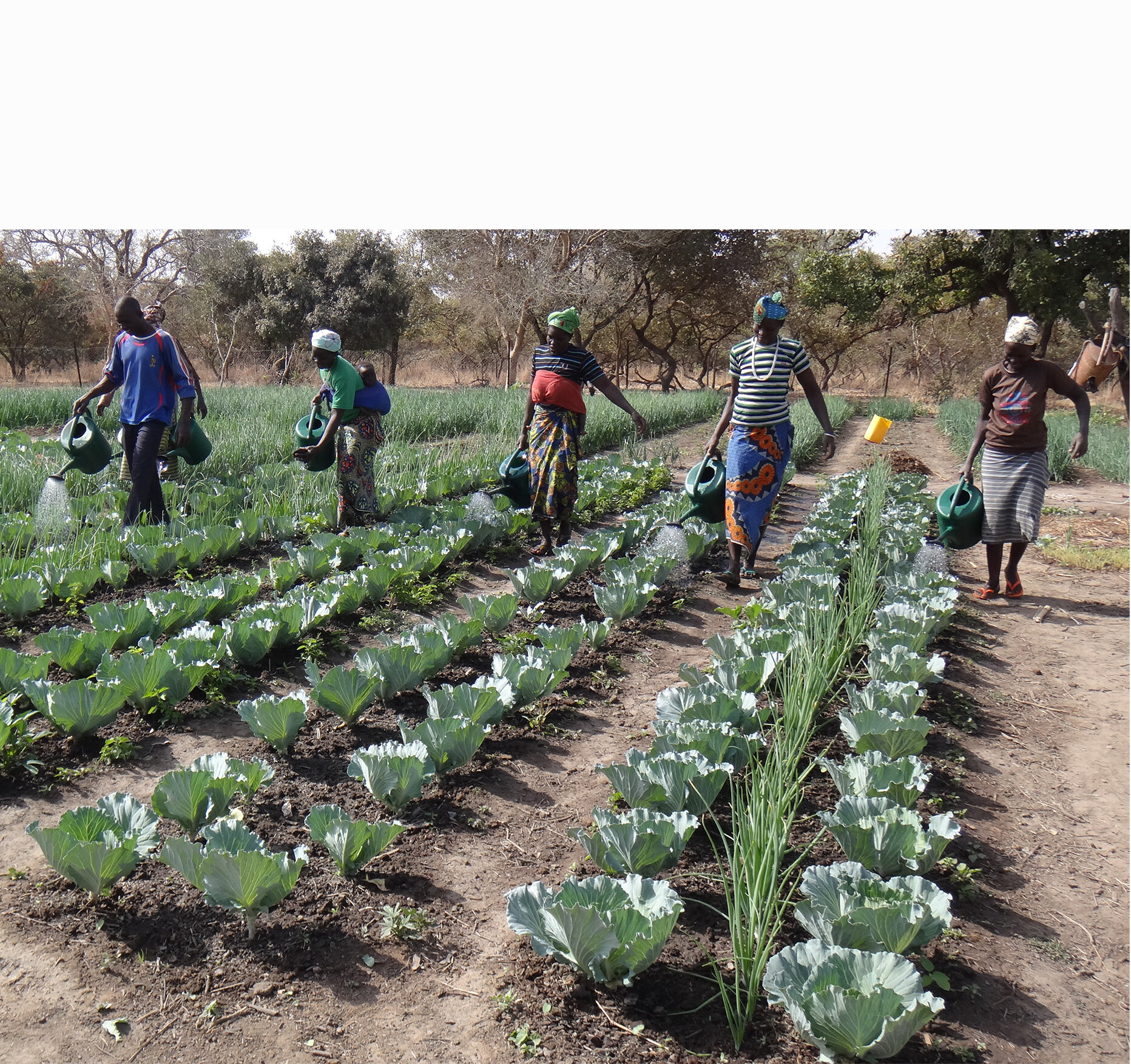
PROGRAM AREA: FOOD SOVEREIGNTY
Building capacity and power in Indigenous communities, frontline communities, and social movements
Food Sovereignty is the right of peoples to healthy and culturally appropriate food produced through ecologically sound and sustainable methods, and to define their own food and agriculture systems. - La Via Campesina

Mission
To realize global food, land and water sovereignty in alignment with local, culturally rooted visions for ecological and human wellbeing.
Vision
Food sovereignty is the primary food production and consumption system globally
Land tenure and territorial security for land and sea stewards is secured globally for multi-generational, regenerative use and stewardship and intrinsic value
Living, integrated agroecological and Indigenous food systems are nourished
Community ownership structures thrive and create wealth for food producers
Racial and social justice is realized and past and present injustices that underpin extractive, industrialized food economies are vanquished.
Food is recognized not as a commodity but as medicine and as a core component of buen vivir.
Strengthen policy and infrastructure to advance the enabling conditions that support food sovereignty to flourish globally
Approach
Food Sovereignty depends on a set of enabling conditions existing in the world – both ecological and social-cultural. Likewise, its impacts are myriad. As food sovereignty is achieved, it advances and provides benefits for a set of intersecting issues:
Climate Justice
Cultural Continuity
Gender Justice/Expression
Disaster Risk Reduction, Peace and Conflict, Migration, Immigration
Ecologies, Conservation and Water
Health
Labor, Economies, Markets and Livelihoods
Rights and Governance, Leadership and Community Accountability
We believe food sovereignty is a viable strategy for addressing hunger, poverty, the climate crisis and preventable diseases as well as ecological restoration and economic growth.
We focus on fighting agro-industrial food systems and on advancing agroecological and Indigenous food systems. Within these systems our focus is largely on the policies and practices that inform production, and to a lesser extent, distribution and consumption and disposal of food.
We strive for food, land, and cultural sovereignty and justice. We embrace diverse, context-specific endeavors that are rooted in local, Indigenous wisdom and practice and remain accountable to the communities served.
We take a regional approach in order to address unique geopolitical factors and context our partners are experiencing and the solutions they are advancing.
We support food sovereignty in its fullest and most vibrant settings and in places where traditional food systems, landscapes, seascapes, and cultures alike are in need of repair and revitalization.
We recognize food producers – farmers, fishers, herders, hunters, gatherers, laborers, land and sea stewards, women, and Indigenous Peoples – as the frontline of our local food systems around the world.
We support racial, ethnic and gender justice; democratic, representative, and accountable leadership; and intergenerational knowledge transfer and investments in youth and new leaders as necessary for food sovereignty now and into the future.
We fund both the land bases and the governance and economic systems that provide the enabling conditions for food systems to flourish.
Geography
This program makes grants in Africa, Asia-Pacific, Latin America, and North America, and to Global Networks.